Quick Verdict
Yes – you can keep riding all winter with a few changes. Run your tires at the low end of their pressure range (or fit wider, knobbier or studded tires), add bright front and rear lights, dress in layers with warm gloves, ride slowly and smoothly on snow and ice, and clean and re-lube your chain after salty, slushy rides.
Winter does not have to mean parking your bike until spring. Bike paths are quieter, a cold-weather ride wakes you up better than coffee, and a commute by bike skips the icy traffic jams. The catch is that snow, ice, salt and early darkness ask more of you and your bike.
This guide covers everything that changes when the temperature drops: how to set up your bike, what to wear, how to handle snow and ice, how to look after an e-bike battery and how to keep salt from eating your drivetrain. If you are still wondering whether it is a good idea at all, start with our answer to can you ride your bike in the snow.
Before You Ride
Is It Safe to Ride a Bike in Winter?
For most riders, yes – as long as you are prepared and the conditions are rideable. A good rule of thumb from REI: it is too cold any time you would not be comfortable, and are not dressed, to walk as far as you plan to ride. If your bike breaks down, that is exactly what you may have to do.
Some days are better spent indoors. Bosch eBike Systems advises giving both e-bikes and regular bikes a rest in black ice or drifting snow, and only riding in winter if you are confident you can handle slippery conditions. Fresh freezing rain, glare ice and whiteouts fall into that group.
Start with short rides close to home. They let you test your clothing and setup, and you can build up to longer rides or a full commute once you know what works.
Gear For Winter Rides
Setup
How to Set Up Your Bike for Winter
You do not need a special winter bike. The bike you already ride can handle most winter days with a few changes, and you already know how it handles. Lights and tires matter most.
Tires and Tire Pressure
Run your tires at the low end of the pressure range printed on the sidewall. A softer tire puts more rubber on the road for better grip and soaks up frozen ruts and potholes. Cold air also makes tires lose pressure, so check them before every ride – a tire already at the bottom of its range can quickly drop below it.
One trap: set your pressure outside, not in a warm house or garage. Air contracts in the cold, so a tire that feels right indoors can be soft enough to hit the rim once you are outside.
If you ride on slush, wet leaves or packed snow, a wider tire with deeper knobs grips better than a slick road tire. For regular riding on ice, studded tires are the only tires that really bite. They cost more than standard tires, but they are a worthwhile buy if you ride on icy roads every week.
Fat Bikes on Snow
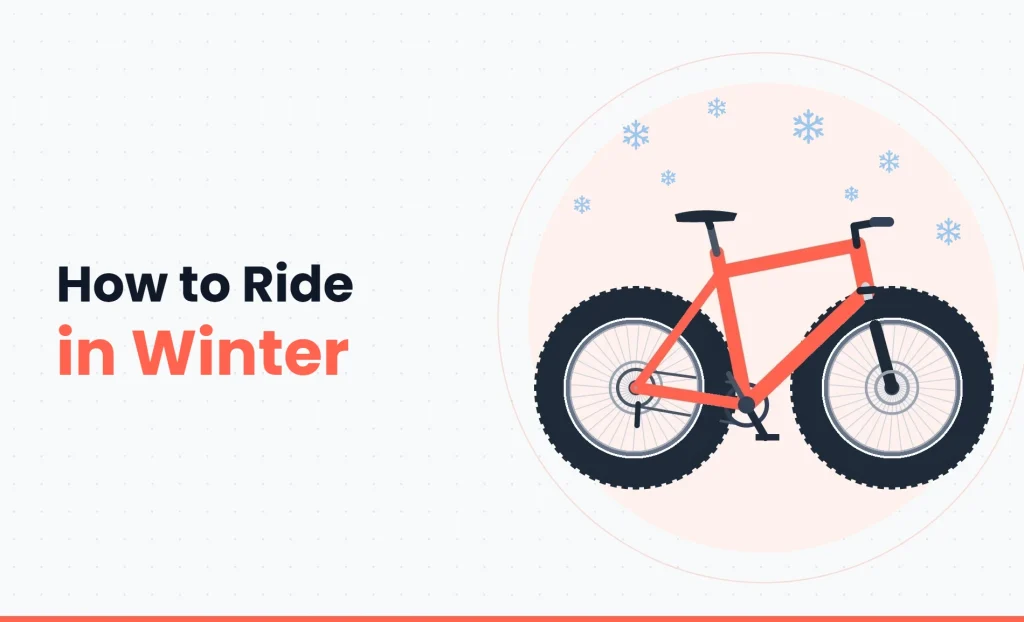
A fat bike with 4-inch or wider tires floats over snow where narrow tires sink, which is why fat bikes are the go-to choice for snowy trails (see are fat tire bikes good for snow and the pros and cons of fat tire bikes). On snow they run very low pressure. As a starting point, 45NRTH racer Danielle Musto uses about 6 psi in the rear and 5.5–6 psi in the front on hard-packed snow, and drops to about 5 psi rear and 4–4.5 psi front when the snow is loose. On firm, fast trails some riders go up to 9–10 psi.
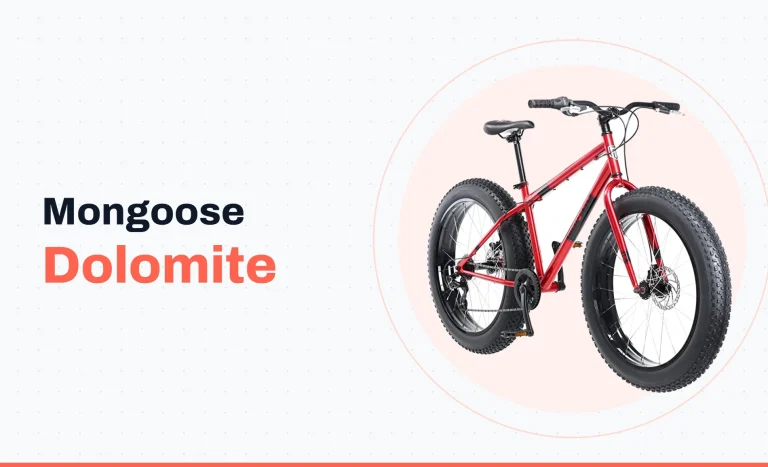
Small changes matter: letting out just 1–2 psi can be the difference between floating and sinking, so carry a small pump and adjust as conditions change. Budget fat bikes like the ones in our Mongoose Dolomite vs Malus comparison are an affordable way to try snow riding.
Fenders
Fenders keep slush, salty spray and road grime off you and off your drivetrain. Full-coverage fenders are best for commuting; clip-on fenders work on bikes without mounts.
Brakes
Disc brakes work better than rim brakes in wet, slushy weather. If you ride rim brakes, check your pads often – grit wears them quickly in winter. Whatever you ride, expect longer stopping distances and brake earlier.
Lights and Visibility
In winter you will often ride before sunrise or after sunset. REI suggests at least 500 lumens for your main front light and 100 lumens for your main rear light, plus a second, smaller light front and rear as a backup. Put a secondary light on your helmet or bag so drivers see two lights moving differently. Batteries drain faster in the cold, so charge your lights before every ride. Add reflective trim or a reflective vest so drivers can spot you from every direction.
Clothing
What to Wear for Winter Cycling
Dress in layers so you can add or remove warmth as you go. Start your ride feeling a little cool – you will warm up within a few minutes. Carry a warm jacket for stops, because you cool down fast when you stop pedaling.
- Base layer: a wicking long-sleeve top (merino or synthetic, not cotton) keeps sweat off your skin.
- Outer layer: a windproof, waterproof cycling jacket and pants or warm tights. Bright colors and reflective details help drivers see you.
- Head: a thin cap or headband under your helmet adds a lot of warmth. In severe cold, add a face mask or balaclava.
- Hands: your fingers get cold first. Choose the warmest waterproof gloves that still let you brake and shift safely. Lobster mitts or bar mitts (pogies) help in deep cold.
- Feet: wear thick wool socks, and add windproof shoe covers. Many winter riders use shoes half a size larger to fit the socks without cutting off circulation.
- Eyes: clear glasses or goggles block wind, snow and road spray.
- Warmers: air-activated hand and toe warmers help on the coldest days. Open them a few minutes before you leave.
Technique
How to Ride on Snow and Ice
Riding on a slippery surface is all about being smooth. Sudden braking, steering or power is what makes tires slide.
- Shift to an easier gear before you start and pedal smoothly. Too much power at once spins the rear wheel. On an e-bike, start without the strongest assist mode – Bosch notes that too much support just makes the tire spin.
- Stay loose. Keep your elbows and knees bent so your legs absorb bumps and frozen ruts instead of the tires losing contact.
- Brake early and gently, and leave much more room to stop than in summer.
- Coast straight across ice. If you hit an icy patch, do not brake or turn – roll across it in a straight line and steer once you have grip again.
- Watch for refreeze. Snowmelt from the afternoon often freezes overnight, and bridges and low spots ice over first.
- Take the lane when you need to. If the bike lane or shoulder is full of snow, slush or glass, ride in the right-hand traffic lane where drivers can see you, and follow your local traffic laws.
- Look ahead. Scan for ice, wet leaves, metal grates and frozen tire tracks so you have time to slow down or steer around them.
Keep Reading
More Snow and Fat Bike Guides


E-Bikes
Winter Tips for E-Bike Riders
E-bikes are great in winter – the motor means you sweat less under your layers – but the battery needs some care. Lithium-ion cells lose capacity in the cold, so expect less range than in summer and use eco mode more often.
- Keep the battery warm. In freezing weather, Bosch recommends removing the battery, keeping it at room temperature and putting it back on just before you ride. A neoprene battery cover helps on the ride itself.
- Charge indoors. Charge the battery at room temperature, never in a freezing garage or shed.
- Store it right. Bosch suggests storing the battery indoors at about 50–68°F (10–20°C). If you park your e-bike for the whole winter, store the battery dry, not too cold, and about 30–60% charged.
- Ride conservatively. More time in eco mode and less in turbo stretches your range. If you are shopping for an e-bike, see our picks of the best electric bikes under $2,000.
Maintenance
Winter Bike Care: Cleaning, Lube and Storage
Road salt, grit and slush are hard on chains, cables and bearings. A few minutes after each ride saves you a lot of money in worn parts.
- Wipe down after grimy rides. Wipe your chain and drivetrain after slushy or salty rides – at least once a week if you ride regularly – and do a full clean every few weeks.
- Use a wet lube. After cleaning, lightly coat the chain with a wet lube made for wet and dirty conditions. A dry chain wears quickly and starts to squeak – if yours already does, see why your bike squeaks when pedaling.
- Clean the brakes. Wipe your rims or rotors and check the brake pads after snowy rides.
- Watch for rust. Salt speeds up corrosion on the chain, bolts and cables. If rust has already started, our guide on how to remove rust from a bike walks you through it.
- Store your bike inside if you can, or at least under cover. If it freezes outside, bring it inside to thaw before you ride so the moving parts work freely.
- Do a check-up before winter. Brakes, gears, lights and tires should all work properly before the first snow. Our bike maintenance guide covers the basics.
Indoor Option
When to Stay Inside
On black ice, in a blizzard or in dangerous wind chill, ride indoors instead. A bike trainer turns your own bike into an indoor bike, so you keep your fitness until the roads clear. Not sure your bike will fit? Read do bike trainers work with mountain bikes.
In short: winter riding comes down to grip, visibility, warmth and care. Lower your tire pressure, light yourself up, dress in layers, ride smoothly and clean the salt off your bike, and you can keep riding all season.
Gear For Winter Riding
Salt, cold and early darkness mean your bike needs a bit more care in winter. These picks help you keep tire pressure right, keep the drivetrain clean and keep training when the roads are too icy.
Pressure gauge
Topeak SmartGauge D2
A digital gauge for precise pressure checks before every ride – properly inflated tires last longer.
View on AmazonBike cleaner
Muc-Off Nano Tech Bike Cleaner
A fast-acting, biodegradable spray that lifts mud and road grime from the frame, wheels and drivetrain without harming paint or seals.
View on AmazonBike grease
Park Tool PPL-1 Polylube 1000
A trusted all-round bearing and thread grease for headsets, bottom brackets, pedals and bolts – keeps parts turning smoothly and stops them seizing.
View on AmazonHelmet
Giro Register MIPS II
A comfortable, adjustable helmet with MIPS protection for commuting and casual rides.
View on AmazonBike trainer
Alpcour Fluid Bike Trainer Stand
A quiet fluid trainer that turns your bike into an indoor training bike. It fits most road and mountain bike wheel sizes.
View on AmazonTrainer accessory
KOM Cycling Front Wheel Riser Block
Levels the front wheel when your bike is on a trainer, with three heights for a natural riding position.
View on AmazonAs an Amazon Associate, The Bike Magazine earns from qualifying purchases. Prices and availability are shown on Amazon.
Frequently Asked Questions
Quick answers to the questions riders ask most about cycling in winter.
How cold is too cold to ride a bike?
There is no single temperature limit. A good rule from REI is that it is too cold when you would not be comfortable, or dressed, to walk the whole distance of your ride in case your bike breaks down. With the right layers, many riders ride well below freezing. Ice and wind chill are usually bigger problems than the temperature itself.
Should I lower my tire pressure in winter?
Yes. Run your tires at the low end of the pressure range printed on the sidewall for more grip, and check the pressure before every ride, because cold air makes tires lose pressure. On snow, fat bikes run very low pressure – often around 4–6 psi on soft snow.
Do I need studded tires for winter cycling?
Only if you ride on ice regularly. Wider, knobbier tires at lower pressure handle slush and packed snow well, but on ice only studded tires really grip. If your roads are icy for weeks at a time, studded tires are worth the cost.
Is road salt bad for my bike?
Yes, salt speeds up rust and wears your chain, cables and bearings. Wipe your bike down after salty rides, clean it fully every few weeks and re-lube the chain with a wet lube. Fenders also keep a lot of salty spray off the drivetrain.
Can you ride an e-bike in the snow?
Yes, but go easy on the power. Start in a low assist mode so the rear wheel does not spin, expect less battery range in the cold, and store and charge the battery indoors at room temperature. Bosch recommends leaving any bike at home in black ice or drifting snow.