The Bike Magazine publishes bike reviews, brand guides, side-by-side comparisons, how-to guides and state-by-state trail guides. This page explains where our information comes from, how we check it, and what our ratings out of 5 mean.
How We Research a Bike
Every review, brand guide and comparison starts with the same checklist:
- Specs and geometry. We read the manufacturer’s spec sheet and geometry chart for the model year we write about: frame material, drivetrain, brakes, wheels and tires, suspension, weight and the size range.
- Price checks. We note the current price from the brand or a major retailer and say when it was checked (for example, “prices checked in November 2026”). Prices change often, so always confirm on the seller’s page before you buy.
- Rivals in the same price range. A bike is only good or bad compared with what else your money can buy, so we line it up against its closest competitors.
- Warranty, returns and recalls. We read the brand’s official warranty and return pages and search the U.S. Consumer Product Safety Commission (CPSC) recall list.
- Owner feedback. We look for patterns in owner reviews and long-term reports: sizing, assembly, durability and customer service.
When we have ridden a bike ourselves, the review says so. Otherwise the review is a research-based assessment built from the sources above, and we say what we could not check.
How We Rate Bikes (Scores Out of 5)
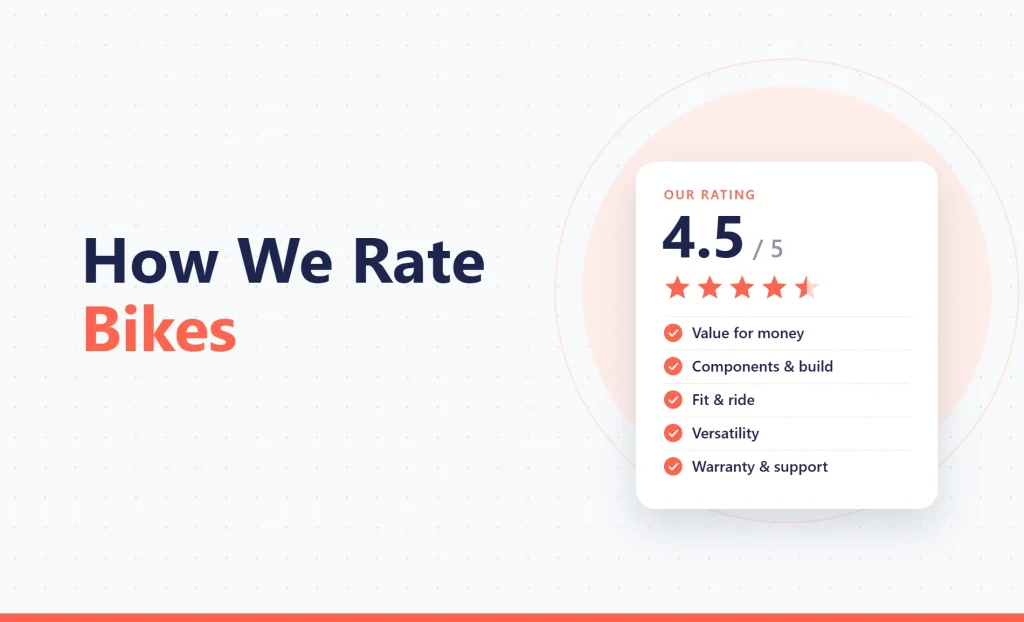
Reviews show an “Our rating” score from 1 to 5. The score is an editorial judgment across five areas, always measured against bikes in the same category and price range:
- Value for money – what you get for the price compared with close rivals.
- Components and build – drivetrain, brakes, wheels, frame and finishing parts.
- Fit and ride for its intended use – geometry, size range and how well the bike suits the riding it is sold for.
- Versatility – tire clearance, mounts, upgrade path and how many kinds of riding it can handle.
- Warranty, support and reliability – warranty length, dealer or direct support, and any recalls or known problems.
| Score | What it means |
|---|---|
| 4.5 – 5.0 | Outstanding. Among the best in its class; easy to recommend. |
| 4.0 – 4.4 | Very good. A strong choice with minor trade-offs. |
| 3.5 – 3.9 | Good. The right bike for some riders, with clear compromises. |
| 3.0 – 3.4 | Average. Look at the alternatives first. |
| Below 3.0 | Not recommended for most riders. |
Scores are updated when a model, its price or its warranty changes enough to move the verdict.
How We Compare Bikes
Our “vs” articles compare bikes that a shopper would really choose between, usually in the same price band. Each one has an At a Glance table with the key specs side by side, a section per difference that matters (frame, gearing, brakes, tires, fit), and a verdict by rider type instead of a single winner, because the better bike depends on how and where you ride.
How We Build Trail Guides
Our state trail guides use official sources first: state parks and natural resources departments, the National Park Service, county and city trail pages and local trail organizations, plus TrailLink for lengths and surfaces. Map pins come from OpenStreetMap trailhead or park locations. When we find a closure or detour, we note it on the trail card. Trail conditions change quickly, so check the official trail page before you ride. You can browse every guide on our US bike trails hub.
Affiliate Links and Independence
Some links on The Bike Magazine are affiliate links, including Amazon links. If you buy through them, we may earn a small commission at no extra cost to you. Commissions never decide a rating, a verdict or which bike we recommend. Read our full affiliate disclosure.
Updates and Corrections
We revisit articles when models, prices or trail conditions change, and every article shows its last updated date at the end. If you spot a mistake or an outdated price, email us at info@thebikemagazine.com and we will check it.
Who Writes The Bike Magazine
Our reviews, guides and trail pages are written and updated by Patrik Flinch. You can see every article on the author page.