
Quick Verdict
The REI Co-op Cycles DRT 1.2 is the better trail bike, while the Trek Marlin 5 is the better value and the better everyday bike. Both have an aluminum frame, a 1x drivetrain with a 32T chainring and Shimano MT200 hydraulic disc brakes. The DRT 1.2 ($1,189) adds a 120mm fork, thru axles, 10-speed gearing and 2.6″ Maxxis tires; the Marlin 5 ($799.99) is $389 cheaper and adds a lockout fork, rack mounts and seven frame sizes.
The REI Co-op Cycles DRT 1.2 and the Trek Marlin 5 are two of the first hardtails new riders look at when they want a real trail bike instead of a department-store mountain bike. Both have aluminum frames, single-ring drivetrains, Shimano hydraulic disc brakes and wheel sizes matched to frame size: 27.5-inch wheels on the smallest frames and 29-inch wheels on the rest.
The difference is how far each one leans toward the trail. The DRT 1.2 ($1,189) gets a longer 120mm fork, thru axles front and rear, a 10-speed drivetrain and 2.6-inch Maxxis tires. The Marlin 5 ($799.99) costs $389 less and is the more versatile everyday bike, with a lockout fork, rack and kickstand mounts and seven frame sizes. If you’re also looking at Trek’s pricier models, see our Trek Marlin 7 vs Rockhopper Comp comparison.
Below we compare the current specs side by side, then go through frame and fit, drivetrain, brakes, fork and tires, and price, so you can pick the right hardtail for the way you ride in 2026.
At a Glance
REI DRT 1.2 vs Trek Marlin 5 Specs
| Spec | REI Co-op Cycles DRT 1.2 | Trek Marlin 5 Gen 3 |
|---|---|---|
| Price | $1,189 (rei.com) | $799.99 (trekbikes.com) |
| Frame | Co-op aluminum, internal routing, dropper compatible | Alpha Silver aluminum, internal routing, rack and kickstand mounts |
| Fork | SR Suntour XCM32 Boost coil, 120mm | SR Suntour XCT 30 coil, lockout, 100mm (80mm on XS) |
| Axles | 15mm front / 12mm rear thru axles (Boost) | Quick release front / 135x5mm ThruSkew rear |
| Drivetrain | microSHIFT Advent X 1×10 | Shimano CUES U4000 1×9 |
| Gearing | 32T, 11-48 cassette | 32T, 11-46 cassette |
| Brakes | Shimano MT200 hydraulic, 180/160mm rotors | Shimano MT200 hydraulic |
| Rims | Co-op double-wall, tubeless-ready | Bontrager Connection double-wall, 20mm |
| Tires | Maxxis Rekon 2.6″ | Bontrager Montrose Comp 2.4″ |
| Wheel size | 27.5″ (XS–S), 29″ (M–XL) | 27.5″ (XS–S), 29″ (M–XXL) |
| Sizes | XS–XL, about 5’0″–6’3″ | XS–XXL (7 sizes), about 4’9″–6’8″ |
| Head / seat angle (M) | 67° / 77° | 66.5° / 74° effective |
| Weight (M) | Not listed by REI | 33.3 lb (15.1 kg) |
Specs and prices from rei.com and trekbikes.com, checked in November 2026. REI doesn’t publish a weight for the DRT 1.2. Prices change often and both stores run sales, so check the current price before you buy.
Trail Ride Essentials
Frame and Fit
Frame, Fit and Sizing
Both frames are aluminum with internal cable routing and room to add a dropper post later. The DRT 1.2 is built around a 15mm front and 12mm rear thru axle with Boost hub spacing, which keeps the wheels stiffer and makes future wheel upgrades easier. The Marlin 5 uses a quick-release front wheel and Trek’s 135x5mm ThruSkew rear axle, a sturdier take on a standard quick release. The Marlin also has rack and kickstand mounts, which matters if you plan to commute or ride on the road.
Sizing is where Trek pulls ahead. The Marlin 5 comes in seven sizes from XS to XXL, including an in-between ML, and Trek’s chart covers riders from about 4’9″ to 6’8″. The DRT 1.2 comes in five sizes (XS–XL) for riders from about 5’0″ to 6’3″, and REI reviewers say it fits slightly large. Both bikes put 27.5-inch wheels on the XS and S frames and 29-inch wheels on everything else.
The geometry is close, but the DRT is a little more modern. In size M it has a 450mm reach, a 67° head angle and a steep 77° seat angle, which keeps your weight over the front wheel on steep climbs. The Marlin 5 in M has a 440mm reach, a 66.5° head angle and a 74° effective seat angle, so it feels more upright and relaxed on long, flat rides. Trek lists the Marlin 5 at 33.3 lb in size M. REI doesn’t publish a weight for the DRT 1.2, but with a coil fork and 2.6-inch tires it should land in the same low-30-pound range as most aluminum hardtails at this price.
Drivetrain
Drivetrain and Gearing
Both bikes use a single 32T chainring, so there’s no front derailleur to adjust. The DRT 1.2 runs a microSHIFT Advent X 10-speed drivetrain with an 11-48 cassette; the Marlin 5 runs Shimano’s CUES U4000 9-speed group with an 11-46 LinkGlide cassette.
The DRT’s extra cog and 48T low gear give it a slightly easier climbing gear and smaller jumps between gears. Shimano CUES is built for durability: LinkGlide cassettes and chains are designed to last longer, and replacement parts are easy to find at almost any shop. Either bike has enough top-end gearing for riding on flat roads and bike paths, though neither is fast on pavement.
Brakes
Brakes: Shimano MT200 on Both
This one is a tie on paper. Both bikes use Shimano MT200 two-piston hydraulic disc brakes, a dependable entry-level brake that needs little finger effort and is cheap to service. REI pairs them with a 180mm front and 160mm rear rotor on the DRT 1.2, and Trek fits Shimano RT26 rotors in 160mm and 180mm sizes on the Marlin 5.
Hydraulic brakes are a big step up from the mechanical discs and V-brakes found on cheaper budget hardtails. If you’re coming from a department-store bike, either one will stop noticeably better, especially on long descents and in wet weather.
Suspension and Tires
Fork, Tires and Wheels
The fork is the biggest difference between these bikes. The DRT 1.2 has an SR Suntour XCM32 Boost coil fork with 120mm of travel, 32mm stanchions and a 15mm thru axle. It’s stiffer and has more travel than the Marlin 5’s SR Suntour XCT 30, a coil fork with preload adjustment, a hydraulic lockout and 100mm of travel (80mm on size XS). Neither fork has an air spring, but the XCM32 tracks better through roots and rocks, while the XCT’s lockout is handy on pavement and smooth climbs.
Tires also favor REI. The DRT 1.2 rolls on 2.6-inch dual-compound Maxxis Rekon tires mounted on tubeless-ready double-wall rims. The Marlin 5 has 2.4-inch Bontrager Montrose Comp wire-bead tires on Bontrager Connection rims with Schrader valves. The wider Rekons add grip and comfort on loose trails. If you want to go tubeless on the DRT, check that the tires you have are tubeless-ready and add valves and sealant.
Both bikes come with platform pedals (alloy on the DRT, nylon on the Marlin) and have internal routing for a dropper post. Adding a dropper is the most useful first upgrade on either one.
Price and Value
Price and Value
The Marlin 5 is $799.99 on trekbikes.com, $389 less than the DRT 1.2 at $1,189 on rei.com. For that difference the DRT gives you a longer and stiffer fork, thru axles, a 10-speed drivetrain and better tires. Those are real trail upgrades, but the Marlin 5 gets you the same brakes and a proper trail frame for a lot less money.
The closer price match is the Marlin 6 ($999.99), which adds a RockShox Judy air fork, a Shimano CUES 10-speed drivetrain and tubeless-ready Bontrager Kovee wheels. REI also sells the DRT 1.1 for $679 if you want to spend less. Trek bikes are sold through Trek stores, local dealers and trekbikes.com, with a 30-day Unconditional Guarantee on online orders.
The buying experience matters too. REI includes in-store assembly and one year of free adjustments, and co-op members get an estimated 10% back in rewards on full-price items. Trek delivers through local dealers or offers in-store pickup, and those shops handle warranty and regular tune-ups.
Keep Reading
More Mountain Bike Reviews

The Verdict
Pros and Cons
Here’s how the two hardtails stack up after comparing their current spec sheets.
REI Co-op Cycles DRT 1.2
REI Co-op Cycles DRT 1.2
Key Specs
- Price: $1,189 (REI)
- Gearing: microSHIFT Advent X 1×10, 11-48
- Fork: SR Suntour XCM32 coil, 120mm
- Brakes: Shimano MT200 hydraulic disc
- Extras: Thru axles, Maxxis Rekon 2.6″ tires
Pros of the REI Co-op Cycles DRT 1.2
- Fork: 120mm of travel, 32mm stanchions and a 15mm thru axle.
- Tires: Wide Maxxis Rekon 2.6″ tires on tubeless-ready rims.
- Geometry: Steep 77° seat angle and 450mm reach (M) climb well.
- Service: In-store assembly and a year of free adjustments at REI.
Cons of the REI Co-op Cycles DRT 1.2
- Price: $389 more than the Marlin 5.
- Sizes: Five sizes; tops out around 6’3″.
- Weight: REI doesn’t publish a weight.
- Availability: Sold only by REI.
 REICheck Price
Trek Marlin 5 Gen 3
Trek Marlin 5 Gen 3
Key Specs
- Price: $799.99 (Trek)
- Gearing: Shimano CUES 1×9, 11-46
- Fork: SR Suntour XCT 30 coil, 100mm, lockout
- Brakes: Shimano MT200 hydraulic disc
- Extras: Rack and kickstand mounts, 7 frame sizes
Pros of the Trek Marlin 5 Gen 3
- Price: $389 less than the DRT 1.2.
- Fit: Seven sizes, XS–XXL, for riders about 4’9″–6’8″.
- Versatile: Fork lockout plus rack and kickstand mounts for commuting.
- Durable: Shimano CUES LinkGlide drivetrain with easy-to-find parts.
Cons of the Trek Marlin 5 Gen 3
- Fork: Shorter-travel coil fork with a quick-release axle.
- Tires: 2.4″ wire-bead tires aren’t tubeless ready.
- Weight: Claimed 33.3 lb in size M.
- Gearing: 9 speeds and a narrower 11-46 range.
 TrekbikesCheck Price
Our Pick
Which Should You Buy?
Both are solid first trail bikes with hydraulic brakes and 1x gearing. The right one depends on where you ride and how much you want to spend.
Riders Who Mostly Ride Singletrack
Get the REI DRT 1.2. The 120mm fork, thru axles and 2.6-inch Rekon tires make it more capable on roots, rocks and loose climbs, and it’s a better base for upgrades like a dropper post. If you plan to ride a trail near you most weekends, it’s worth the extra money.
Beginners on a Budget
Get the Trek Marlin 5. At $799.99 it has the same brakes, a reliable 1×9 drivetrain and a real trail frame, and the savings can go toward a helmet, gloves and a dropper later. If $800 is still too much, our Mongoose vs Schwinn guide covers good hardtails for less.
Commuting and Mixed Riding
Get the Marlin 5. The fork lockout, rack mount and kickstand mount make it the better bike for commuting and bike paths, and it still handles easy trails on the weekend.
Very Short or Very Tall Riders
Get the Marlin 5. Trek’s seven sizes fit riders from about 4’9″ to 6’8″, while the DRT 1.2 tops out around 6’3″.
If You Can Spend About $1,000
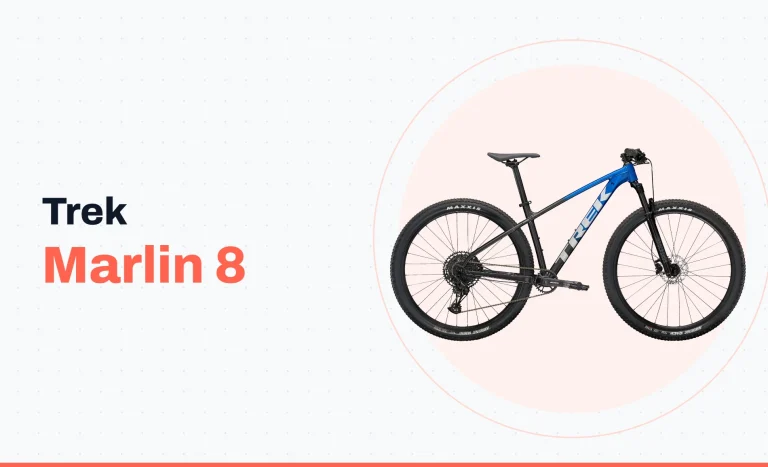
Look at the Marlin 6 ($999.99). It adds a RockShox Judy air fork and 10-speed gearing and still costs less than the DRT 1.2. For more trail performance, the Trek Marlin 8 is the next big step up.
Gear For Your Mountain Bike
Grippy tires, the right pressure and a trail tool cover most of what goes wrong on the trail. These are picks we would put on our own bikes.
Mountain bike tire
Maxxis Minion DHF
A grippy, tubeless-ready trail tire with tough casing options for rocky and rooty terrain.
View on AmazonTubeless sealant
Stan’s NoTubes Tire Sealant
Seals small punctures as you ride – a must-have for tubeless trail, gravel and fat-bike setups.
View on AmazonFloor pump
Topeak JoeBlow Sport III
Correct pressure is the easiest way to prevent pinch flats and uneven wear. 160 psi, a large gauge and a head for Presta and Schrader valves.
View on AmazonPressure gauge
Topeak SmartGauge D2
A digital gauge for precise pressure checks before every ride – properly inflated tires last longer.
View on AmazonTire levers
Park Tool TL-1.2 Tire Levers
Small, strong levers for swapping tires and fixing flats without scratching your rims.
View on AmazonMulti-tool
Crankbrothers M19 Multi-Tool
19 functions in one compact tool – hex and Torx keys, screwdrivers and a chain tool for roadside and trailside fixes.
View on AmazonAs an Amazon Associate, The Bike Magazine earns from qualifying purchases. Prices and availability are shown on Amazon.
Frequently Asked Questions
Quick answers to the questions riders ask most about the REI DRT 1.2 and Trek Marlin 5.
Is the REI DRT 1.2 a good mountain bike?
Yes. For $1,189 it has a 120mm SR Suntour XCM32 fork, thru axles, a microSHIFT Advent X 1×10 drivetrain, Shimano MT200 hydraulic disc brakes and 2.6-inch Maxxis Rekon tires. REI customers rate it 4.6 out of 5 (26 reviews when we checked in November 2026). It’s a capable trail hardtail for beginner and intermediate riders.
Who makes Co-op Cycles bikes?
Co-op Cycles is REI’s in-house bike brand. The bikes are designed for REI and sold only in REI stores and on rei.com, so you won’t find the DRT 1.2 at other bike shops.
Is the Trek Marlin 5 good for trails?
Yes, for beginner and intermediate trails. Its 100mm fork, Shimano CUES 1×9 drivetrain and hydraulic disc brakes handle dirt singletrack and gravel paths well. For rough, rocky trails, a longer-travel fork like the DRT 1.2’s or the air fork on the Marlin 6 is a better fit.
Can I add a dropper post to the DRT 1.2 or Marlin 5?
Yes. Both frames have internal routing for a dropper post. The Marlin 5 uses a 31.6mm seatpost; check the DRT 1.2’s seatpost diameter before you order a dropper.
Which is lighter, the DRT 1.2 or the Marlin 5?
Trek lists the Marlin 5 at 15.10 kg (33.29 lb) in size M. REI doesn’t publish a weight for the DRT 1.2, so there’s no official figure to compare. Expect both to sit in the low-30-pound range that’s typical for coil-fork aluminum hardtails.