
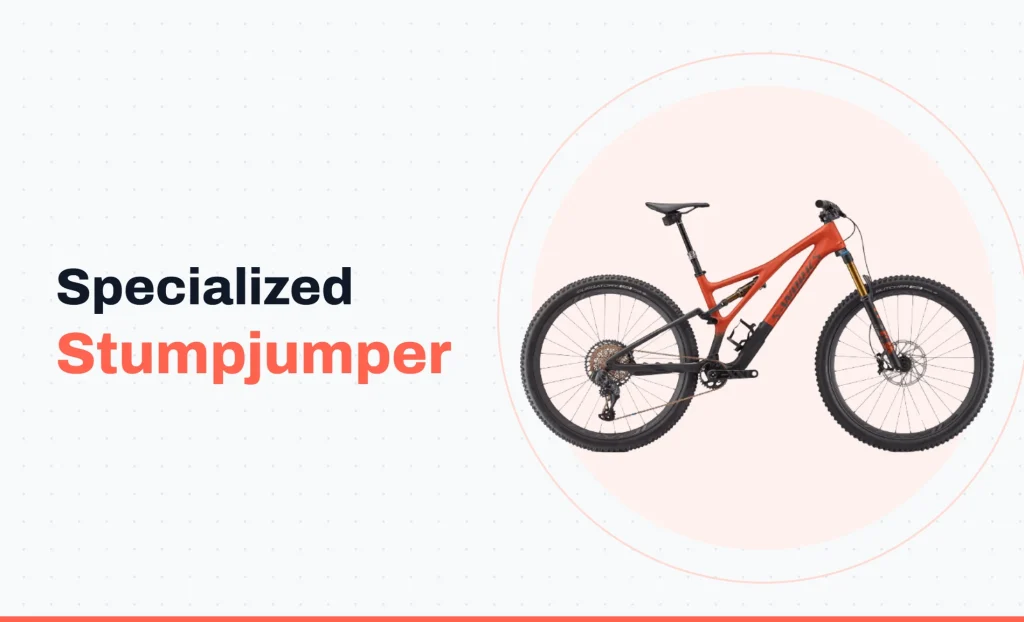
Quick Verdict
Yes – the Specialized Stumpjumper is one of the best trail bikes you can buy. It climbs well, descends with confidence and comes in builds from the alloy Comp to the carbon S-Works. The trade-off is price: even the entry build costs more than most budget trail bikes.
There is nothing worse than having a bike that does not meet your expectations. There are many bicycles that are promoted as the ultimate mountain bikes that will go over any bump, hill, or surface without the rider feeling anything.
However, for every bicycle that gets overpraised by the manufacturers, there is always that one that just lets the customers speak for the bike itself. The Stumpjumper is definitely one of those bikes, the one that promises but over-delivers with its many characteristics and wide array of models that are different but the same, in a way of greatness.
Enjoy the review of Specialized Stumpjumper review, where any doubt about buying this bicycle will be cleared.
Overview
What Is the Specialized Stumpjumper Bicycle?
The Stumpjumper is considered by some to be the Holy Grail of mountain bikes. Many people are confused by the “Specialized” part, wondering what are these bicycles specialized for.
Specialized is actually the brand of the manufacturing company called Specialized Bicycle Components, whose model, the Stumpjumper, is one of the first mountain bike models to ever be produced. First introduced in 1981, the Specialized Stumpjumper is one of the rarest models to still be in production, gradually evolving and improving along the way.
The Specialized Stumpjumper is considered to be not only the flagship model of the whole company but also the archetype of a perfect mountain bike. If you look up “mountain bike” in a dictionary, the Stumpjumper’s picture should be right below the term.
The popularity this bike has achieved must be attributed to the original offer of mountain bikes, which was almost non-existent at the time. People either had to modify their own bikes for off-road riding or buy rare and expensive custom bikes in the ’80s.
Consequently, the demand for the bikes existed and the offer was concocting, as the newly-born Stumpjumper offered the best of both worlds: performance of the expensive, custom-built, off-road bicycle and the affordability of a new, regular bike.


Ushering the era of the up-and-coming mountain biking sport, the Stumpjumper was there from the beginning, catering to the needs of the riders. Steel frame of the original XC model too heavy?
Specialized Stumpjumper M2 comes along with its lightweight aluminum frame. The lightweight nature of the bike makes the rider uncomfortable during bumpy rides? Here is the Stumpjumper FSR with full suspensions. The Specialized company listens to its customers, both professional and leisure riders, and improves upon the models, offering a fulfilling experience for everyone to enjoy.
Today, Stumpjumper bicycles are widely used for leisure rides, as well as professional mountain bike off-road competitions, which tells you a lot about this legendary bike. If you want a bike that lets you feel like you can go anywhere and anytime, this bicycle is for you.
The Lineup
Specialized Stumpjumper Bike Types
As previously mentioned, the Stumpjumper bicycles are not meant to be closed to certain people and open to others. Specialized aimed to provide various builds that cater to various riders’ interests.
In light of that, Specialized offers different combinations of components indicated by the model name, or in this case, the build name.
Specialized Stumpjumper Comp

Specialized Stumpjumper Comp
Pros of the Stumpjumper Comp
- Good and sturdy frame.
- Various sizes.
- Smart spec.
Cons of the Stumpjumper Comp
- Noisy dropper cable.
- Bit pricey for a budget bike.
- Occasional 12th gear slipping.
 SpecializedCheck Price
This build is meant to be the entry-level build meant for a beginner rider, and as such uses components that are not super expensive but offer a great starting point for some people.
For reference, the most popular “Stumpy” Comp model Alloy has an alloy chassis frame, 12 gears with the SRAM NX Eagle lever shifters, 30 mm hookless alloy rims, with 29×2.3 inch front and rear tires.
Suspension is covered with the rear shock Fox Float DPS Performance, with the rebound and 3-position compression adjust, while the fork is Fox Float 34 Rhythm, with two position Sweep adjustment.
Finally, front and rear SRAM G2 R sets of brakes, with the whole bike coming in sizes suitable for children and adults of various body sizes. While there are many Stumpjumper Comp models, these specifications present the typical set of components that you might get.
Occasional 12th gear slipping might be a problem. Still being a popular model, it still has some quirks that some people might find strange, but it’s still an excellent choice for a starter Specialized bicycle.
Specialized Stumpjumper Expert

Specialized Stumpjumper Expert
Pros of the Stumpjumper Expert
- Light.
- Sturdy components.
Cons of the Stumpjumper Expert
- Seat tube angle feels strange.
- Suspension is a bit rough on downhill rides.
SpecializedCheck PriceThe Expert builds of Stumpjumpers are meant for intermediate riders who enjoy off-roading more than the average rider and, as such, have the components that allow such wild excursions.
Taking into account one of the more popular and newer models of the Expert build, the 2021 Specialized Stumpjumper Expert bicycle is equipped with Fox Performance Elite 34 fork, Float DPS Performance Elite rear shock, and GRIP2 damper.
Specialized can’t go without SRAM shifters, so this model has SRAM X01/GX Eagle 12-speed drivetrain and SRAM G2 RSC brakes.
The frame is interesting because it’s built using FACT 11M fiber rear and front triangles, which allows tuning of the frame to such length that the bike feels as light as a feather while avoiding loss of performance while weighing around 25lbs.
The 2021 Specialized Stumpjumper Expert is great for people who want to ride on different trails but they might feel slight discomfort on bigger steeps. Nonetheless, it is a great bicycle for medium mountain trails with various dips and road cadences.
Specialized Stumpjumper Pro

Specialized Stumpjumper Pro
Pros of the Stumpjumper Pro
- Excellent bicycle.
- Quality.
- Longevity.
Cons of the Stumpjumper Pro
- Pedals not included.
- Pricey.
SpecializedCheck PriceWe are reaching the cream of the crop of what Specialized company has to offer. The Stumpy Pro builds are considered to be the ultimate bicycle for a regular person that simply feels the need to conquer every possible terrain and obstacle in front of them.
The point of the Stumpjumper Pro bicycles is to offer some of the components that the best of the best Specialized S-Work build has through the Stumpy Pro bicycles. In other words, the Specialized Stumpjumper Pro is simply a beast.
The frame of Stumpjumper Pro is amazing as Specialized wanted to offer the lightest possible weight without sacrificing the sturdiness during rough bike rides. The frame is a carbon chassis and rear-end with asymmetrical design, fully enclosed internal cable routing, and replaceable derailleur hanger.
The suspension has also been improved with greater stability during descends and greater ease of ascends. FOX FLOAT DPS Factory is the rear shock, with 3-position adjustment with Open Mode Adjustment. The damper on the FOX FLOAT 34 Factory fork is a GRIP2.
The Stumpy Pro is equipped with the, you guessed it, SRAM G2 RSC, 4-piston caliper sets of brakes, both front and rear are identical, naturally.
The SRAM X01 Eagle trigger gear system is fascinatingly better, although 12th gear slipping might happen, it really is once in a blue moon, presenting a minimal problem that should definitely not make you desist from a purchase.
The geometry of the bike has greatly improved over the models from the lower tiers. Stumpjumper Pro is lower but longer than other bicycles, and the seat tube is steeper, a move in the right direction from the Stumpjumper Expert.
Interestingly, rims are hand-built Roval Traverse Carbon 29, hookless carbon. Similar to the Stumpy Pro but somehow better performing in practice. Tires are designed perfectly, with both of them 29×2.3 inches, GRID casing with GRIPTON compound, however, the front is the Butcher grid tire, which proved excellent in cornering and braking traction due to the tall and aggressive center tread. The back tire is Purgatory, famous for its edge consistency and perfect all-around style.
Specialized Stumpjumper S-Work

Specialized Stumpjumper S-Works
Pros of the Stumpjumper S-Works
- Excellent.
- Highest-quality components.
- Durable frame.
Cons of the Stumpjumper S-Works
- Expensive.
SpecializedCheck PriceThe premium bicycle, the belle of the ball, the ultimate biking experience. To put it short, the best everything is put into these bikes. This Stumpy is the highest-grade there is, top components, with the highest grade carbon frame, it’s so light it will float away if you don’t hold on to it and so durable that you have to go out of your way to cause significant damage.
As stated, the frame is a tad bit sturdier and more lightweight than the Stumpjumper Pro, alas, the differences in weight are barely noticeable, as the Specialized Stumpjumper S-Work is maybe a pound lighter than Pro.
Suspension is good with the fork being FOX FLOAT 34 Factory, GRIP 2 damper, while in the rear we have the FOX FLOAT DPS Factory. Rx Trail Tune, EVOL Air sleeve, with 3-position adjustment with the Open Mode Adjustment.
As for the wheels, the rims sported are the Roval Control 240 hookless carbon, hand-built and 2Bliss Ready. The tires are the same as with the Stumpjumper Pro model, Butcher and Purgatory for front and back, respectively, with GRID casing and GRIPTON compound, with the added DT Swiss Competition Race spokes for better traction.
The braking system is covered by SRAM G2 ULTIMATE, 4-piston caliper, hydraulic disc, so you know it’s good.
This one is considered to be the top-tier bike and the face of mountain biking, although its extreme price will definitely make you think twice before buying, especially as the difference between the Stumpy S-Work and the Stumpjumper Pro are really minimal and can be advertently neglected.
Build Quality
Components and Frames
Frames
Every Stumpjumper uses the same trail-focused geometry, but the frame material changes with the build.
Alloy
The Stumpjumper Comp Alloy uses an aluminum chassis. It is heavier than carbon, but it is tough, affordable and a great base for upgrades.
FACT 11M Carbon
The Expert, Pro and S-Works builds use FACT 11M carbon front and rear triangles. They are much lighter and stiffer, with an asymmetrical rear end, fully enclosed internal cable routing and a replaceable derailleur hanger.
SWAT Storage
Specialized’s SWAT door opens into the down tube, so you can carry a tube, tools and snacks inside the frame instead of in a pack.
Components
The components step up with each build, from dependable SRAM NX parts on the Comp to SRAM X01 and carbon wheels on the Pro and S-Works.
Drivetrain
All builds use 12-speed SRAM Eagle drivetrains: NX Eagle on the Comp, X01/GX Eagle on the Expert and X01 Eagle on the Pro. Some riders report an occasional slip in the 12th gear, but it is rare.
Brakes
SRAM G2 hydraulic disc brakes come on every build, from G2 R on the Comp to 4-piston G2 RSC on the Expert and Pro and G2 Ultimate on the S-Works.
Wheels and Tires
The Comp rolls on 30 mm hookless alloy rims, while the Pro and S-Works get hand-built Roval carbon wheels. Most builds use 29 x 2.3-inch tires, with a grippy Butcher up front and a Purgatory at the back.
Suspension
Fox handles the suspension on every build: a Float 34 fork and a Float DPS rear shock. The higher builds add the GRIP2 damper and Factory-level tuning for better control on rough descents.
Ride Feel
Comfort and Performance
Comfort Features
The Stumpjumper is comfortable for a trail bike. The full suspension soaks up roots and rocks, and the steeper seat tube keeps you in a good position for long climbs.
Specialized’s S-Sizing is based on how long and stable you want the bike to feel, not just your height, so you can pick a size that suits your riding style.
Performance Features
On the trail, the Stumpjumper feels balanced. It pedals efficiently uphill and stays calm and planted when the trail points down. The newer, longer and slacker geometry gives it more stability at speed than older models.
The EVO version takes this further with adjustable geometry and more travel, so it suits riders who spend more time on steep, technical descents.
History
The Differences Between Various Models
While most of them are high-quality models that offer a great deal of comfort and durability, there are some minor differences between various yearly models.
2016-2018 Stumpjumper Models
This period was marked by three excellent models: the Specialized Stumpjumper 29, the 650b model, and the 6Fattie Stumpjumper, the last one being the company’s successful foray into the fat bike market.
The main difference between these models was the wheel size, with the 29 model having 29-inch wheels and the other bikes having around 27-inch wheels. What these models share is the proprietary rear shocks called “Autosag”, which are helpful in the dial-in suspension sag. This system is calibrated by inflating the air chamber and sitting on the bike while pressing the Autosag button which expels the excess air.
Additionally, these are the first models that utilized the SWAT door, which is a small compartment inside the downtube that is able to carry tools or any other helpful items.
Finally, these Stumpjumper models are also the ones that popularized the carbon frames, which became the mainstay after this period.
2019-2020 Specialized Stumpjumper Models
This generation consists of the Stumpjumper 29, the model 27.5, the ST version of models 29 and 27.5, and the EVO versions of those same models.
What Specialized wanted to do with this generation is to implement the carbon frame of the generation that came before. Additionally, the geometry of the bikes was changed, making them longer and slacker.
The thing that got scrapped was the Autosag, as this made the Stumpjumper compatible with the majority of aftermarket shocks, making it more consumer-friendly, and the SWAT compartment was kept.
The ST and EVO versions were mostly similar, ST models were meant for short travels, which is what the abbreviation stands for, where the steeper geometry of the bike made it more agile and comfortable for leisure rides. The EVO models are specially designed for downhill riding, where Specialized further tinkered with the geometry of the bike. The Stumpy EVO models were longer in reach and had a reduced offset fork.


2021-Ongoing Specialized Stumpjumper Models
The ongoing generation has two main models that differ in suspension travel and frame geometry, one being the Specialized Stumpjumper and the other being the Specialized Stumpjumper EVO.
The highlights of these models are more size options, where they kept the S-sizing they had implemented in the previous generation, only adding more size options for a wider range of customers. Reach has been extended, head tube angles made more slacker, and seat tubes adjusted to match the geometry.
Of course, the successful reduced offset forks were kept, while a new suspension design was implemented, in order to further reduce weight.
The Specialized Stumpjumper model is considered to be the first full-suspension Stumpy that does not use an FSR suspension system, which is proved to be efficient in eliminating some parts that add extra weight and reduce the efficiency of pedaling.
On the other hand, the Specialized Stumpjumper EVO is a master class of geometry. The flip switches that Specialized had been experimenting with in the previous generations were the cherry on top with this model. The switches allow the rider to further reduce the bike angles and make the bike more aerodynamic.
With all the switches, there are six configurations that riders can decide on to suit their preferences or the terrain they are on.
The best model so far in their offer, the 2021 Specialized Stumpjumper EVO is a sight to behold and a satisfyingly relaxing to ride.
Buyer’s Guide
Which One Is a Good Fit for Me?
With all these amazing models, you’re probably overwhelmed and cannot decide on which one to get. While all these models are excellent in their own way, some really excel in particular fields.
If a full-suspension Stumpjumper is more bike than you need, a hardtail is the cheaper way in. See our Trek Marlin 7 vs Specialized Rockhopper Comp comparison for two of the best entry-level trail hardtails.
Firstly, ask yourself how serious you are with bike riding. Do you see yourself just riding for pleasure around the woods and simply enjoying the view without any worries? Any Stumpy Comp model will fulfill your needs: cheap, reliable, can overcome most off-road paths you want.
If you want to be a more serious rider, where every second and pound matters, then other models might suit you. Expert or even Specialized Stumpjumper Pro models will get you going. More options, more comfort for bumpy roads, and pleasurable rides.
Stumpjumper S-Work models would be ideal for competitive riders, as Specialized company built this model with the competitive edge of some people in mind, although the price tag will make some people look away.
Finally, if you’re just looking for a good all-around bicycle, with good components and customizability, then the 2021 Specialized Stumpjumper EVO is a bicycle for you. New and shiny, with a couple of upgrades and some cutting-edge solutions by Specialized, don’t even think twice if you can spare the buck.
Keep Reading
More Bike Reviews



The Verdict
Pros and Cons of the Specialized Stumpjumper
The Stumpjumper earns its reputation, but it is worth knowing its weak points before you buy.
Specialized Stumpjumper
Pros of the Specialized Stumpjumper
- Versatile: It climbs and descends well, so it handles almost any trail.
- Range of Builds: From the alloy Comp to the S-Works, there is a build for every budget and skill level.
- Quality Parts: Fox suspension, SRAM Eagle drivetrains and SRAM G2 brakes come on every build.
- Smart Details: SWAT storage, internal routing and S-Sizing make it easy to live with.
Cons of the Specialized Stumpjumper
- Price: Even the Comp is pricey for a first mountain bike, and the S-Works is very expensive.
- Gear Slipping: Some riders report an occasional 12th-gear slip.
- Noisy Dropper Cable: The dropper cable can rattle on some builds.
- No Pedals: Pedals are not included.
SpecializedCheck Price


Gear For Your Mountain Bike
Grippy tires, the right pressure and a trail tool cover most of what goes wrong on the trail. These are picks we would put on our own bikes.
Mountain bike tire
Maxxis Minion DHF
A grippy, tubeless-ready trail tire with tough casing options for rocky and rooty terrain.
View on AmazonTubeless sealant
Stan’s NoTubes Tire Sealant
Seals small punctures as you ride – a must-have for tubeless trail, gravel and fat-bike setups.
View on AmazonFloor pump
Topeak JoeBlow Sport III
Correct pressure is the easiest way to prevent pinch flats and uneven wear. 160 psi, a large gauge and a head for Presta and Schrader valves.
View on AmazonPressure gauge
Topeak SmartGauge D2
A digital gauge for precise pressure checks before every ride – properly inflated tires last longer.
View on AmazonTire levers
Park Tool TL-1.2 Tire Levers
Small, strong levers for swapping tires and fixing flats without scratching your rims.
View on AmazonMulti-tool
Crankbrothers M19 Multi-Tool
19 functions in one compact tool – hex and Torx keys, screwdrivers and a chain tool for roadside and trailside fixes.
View on AmazonAs an Amazon Associate, The Bike Magazine earns from qualifying purchases. Prices and availability are shown on Amazon.
Frequently Asked Questions
Quick answers to the questions riders ask most about the Specialized Stumpjumper.
Is Stumpjumper good at climbing?
Considering how some models perform at descents, these ones are pretty good climbers. It will definitely exceed your expectations when you test it yourself.
I am considering buying the Stumpjumper Alloy but heard it isn't a good pick for mountain biking, is that true?
The Stumpjumper Alloy is an excellent bike, although due to its weight, it might be a bit of counterproductive to ride it on some hardcore off-road rides. However, it is still a good choice for mild mountain tracks, so you will not feel like you wasted money if you decide to buy it, no worries.
I have heard that Stumpjumper bikes don't come with pedals, is that correct?
Yes, the majority of the newer mountain bikes do not come with pedals. The reason is that the majority of advanced bikers already have their own specific preference when it comes to pedals, so new models of Stumpies come without pedals out of the box.
What is the difference between the Stumpjumper and the Stumpjumper EVO?
The Stumpjumper is an all-round trail bike, while the EVO has more aggressive, adjustable geometry for steep and technical descents. Its flip chips give six geometry settings.